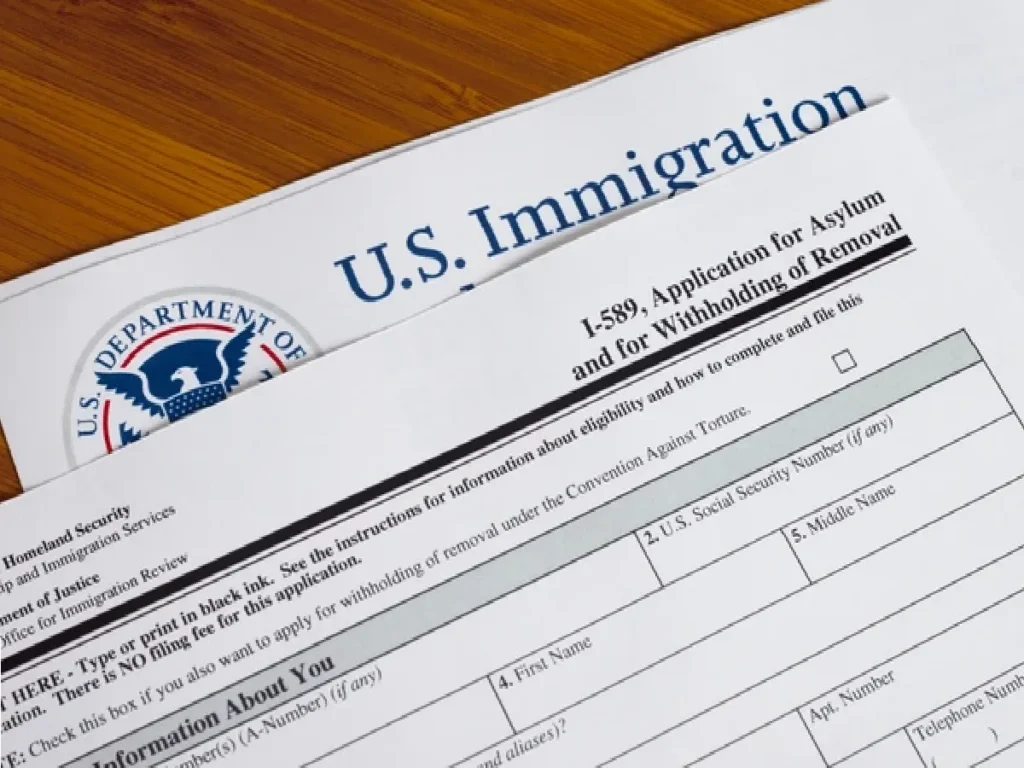
Withholding of removal requirements are what every immigrant needs to know if there is a real risk of being sent back to a country where life or freedom could be in danger. Think of it as a protection that stops deportation, but it’s stricter than asylum. Many people get confused between asylum and withholding of removal, and between deportation orders and withholding orders, so let’s break it all down.
This guide walks through what withholding of removal is, who can qualify, the process to apply, and even how CAT (Convention Against Torture) works alongside it.
What is Withholding of Removal?
Simply put, what is withholding of removal? It is a legal protection for immigrants who can prove that being sent back to their home country would likely put their life or freedom in serious danger.
Here’s the key:
- It prevents deportation.
- It does not give permanent residency automatically.
- Family members do not get automatic protection under this.
- It’s stricter than asylum, so the proof must be solid.
Withholding of Removal vs Asylum
It’s easy to mix the two up. Here’s a simple way to see the difference:
| Feature | Asylum | Withholding of Removal |
| Protection Type | Can lead to permanent residency | Stops deportation only |
| Timing | Must apply within 1 year (exceptions exist) | Can apply anytime during removal proceedings |
| Proof Required | Well-founded fear of persecution | More likely than not to face persecution |
| Family Benefits | Yes, spouse and children | No derivative benefits |
Notice how withholding of removal requirements are stricter and more technical than asylum? That’s why it’s important to follow every step carefully.
What About CAT?
Sometimes, even if you don’t qualify for withholding of removal, CAT immigration protection can help. CAT stands for Convention Against Torture.
Here’s what matters:
- CAT protects you from countries where torture is likely.
- You can apply for CAT protection at the same time as withholding of removal using the i 589 application for asylum and for withholding of removal.
- You need to prove that government officials, or people acting with their permission, could harm you.

Who Qualifies: Withholding of Removal Requirements
To get approval, you need to meet certain withholding of removal requirements. Here’s what the immigration authorities are looking for:
- Evidence of persecution due to race, religion, nationality, political opinion, or social group membership.
- Proof that returning home would put your life or freedom at serious risk.
- Documentation like police reports, medical records, affidavits, or media reports.
- Filing during removal proceedings or alongside asylum.
Remember: it’s not enough to just fear returning. You must prove that danger is likely.
Step-by-Step Guide to Apply
Step 1: Gather Your Documents
- Passport, visa, and ID
- Proof of persecution (police reports, medical reports, news articles)
- Statements from witnesses who can confirm your story
Step 2: Fill Out Form I-589
- This is the i 589 application for asylum and for withholding of removal
- Include your personal info, details about your country, and why you fear returning
Step 3: Submit On Time
- Submit before deportation is enforced
- No strict one-year rule, but applying early helps credibility
Step 4: Attend the Credible Fear Interview
- Conducted by USCIS or an immigration judge
- Show clearly that persecution is likely if you return
- Answer honestly and provide evidence
Step 5: Go to Immigration Court
- Bring your documents and legal representation if possible
- Show proof that you meet withholding of removal requirements
- You can include expert testimony if needed
Step 6: Wait for the Decision
- Approval means deportation withheld
- Denial can be appealed to the Board of Immigration Appeals (BIA)
Benefits of Withholding of Removal
- Stops deportation to a dangerous country
- Lets you stay legally in the United States
- Eligible for work authorization after one year
- Access to some social services depending on state laws
Can Withholding of Removal Be Revoked?
Yes, it can. Here’s when:
- If conditions in your home country change significantly
- If fraud or misrepresentation is found in your application
- If you commit certain crimes affecting eligibility
Revocation is uncommon, but it shows why honesty and documentation matter.
Conclusion:
Meeting withholding of removal requirements is about proving real danger backed by evidence. Knowing the steps, differences from asylum, and CAT protections can make the process smoother.
Frequently Asked Questions
What is a withholding order immigration?
A withholding order immigration stops deportation when the person meets withholding of removal requirements due to risk of persecution.
How is asylum different from withholding of removal?
Asylum can lead to permanent residency and benefits for family. Withholding only stops deportation.
Can withholding of removal lead to a green card?
No. You need a separate immigration path for permanent residency.
What does CAT mean in immigration?
CAT stands for Convention Against Torture. It protects people from returning to countries where torture is likely.
What is the standard of proof?
Withholding requires showing it is “more likely than not” you would face persecution.
Can family members apply with me?
No, unlike asylum, family members do not automatically qualify.
Can withholding of removal be denied?
Yes, if the applicant fails to meet withholding of removal requirements.
Can I file during deportation proceedings?
Yes, filing during removal proceedings is allowed and recommended.
How long does the process take?
It varies. Court schedules and USCIS workload affect timing.
What is deportation order vs withholding order?
A deportation order means you must leave the US. A withholding order prevents deportation because of risk of persecution.