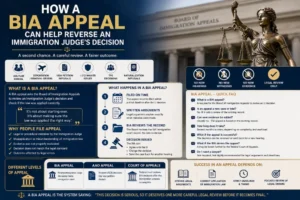
Being the recipient of a deportation or removal order can be a very stressful situation, particularly if you may not know what to do next. You may appeal an Immigration Judge’s (IJ) legal or factual error by filing a deportation appeal.
The appeal process has strict deadlines, filing requirements, and rules as to what the Board of Immigration Appeals (BIA) can review. Knowing what to do at the start will prevent you from losing your chance to appeal.
What Does Getting Deported Mean?
Deportation involves the removal of a noncitizen from the U.S. under an immigration order that is legally binding. Depending on the situation, the process can be after an immigration court proceeding.
A decision to deport may impact an individual’s right to stay in the United States, return in the future, and access other immigration benefits. The consequences are based on the person’s immigration history, the type of order and deportation laws.

Filing an appeal of deportation.
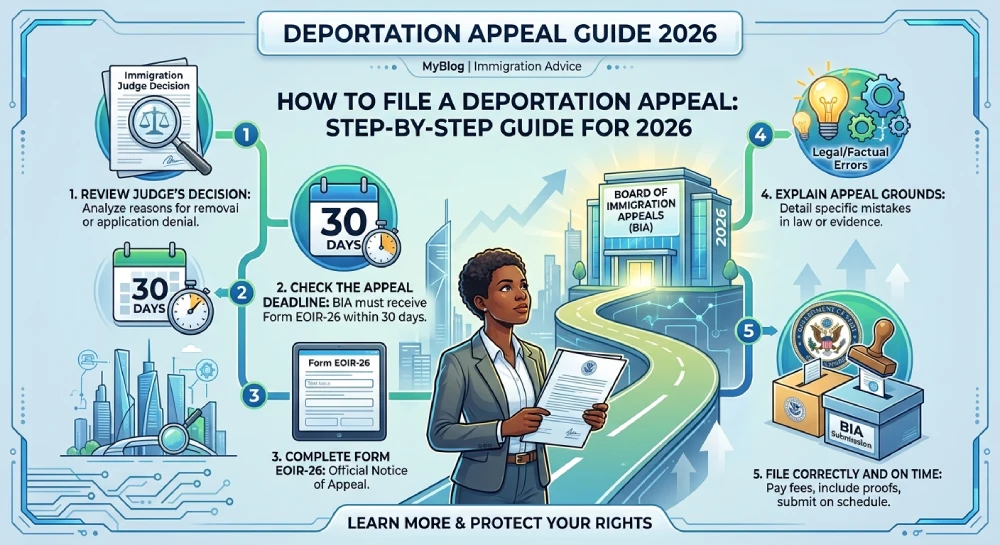
How to File a Deportation Appeal
1. Review the Immigration Judge’s Decision
First, read the written order or the court order carefully. Examine the reasons for the judge’s refusal of your application, or his decision to have you removed.
There can be a problem with the evidence, facts, legal standards or eligibility to immigration relief. It is crucial to comprehend the exact reasons for this decision before deciding upon how to fight deportation.
2. Check the Appeal Deadline
An appeal from an Immigration Judge’s decision is filed by filing Form EOIR-26 and must be received by the Board of Immigration Appeals within 30 calendar days of the Immigration Judge’s oral decision or electronic notification of a written decision.
This is a very critical deadline. If you miss which can lead to dismissal of the appeal as untimely.
3. Complete Form EOIR-26
Generally, a deportation appeal of an Immigration Judge’s decision will be filed on Form EOIR-26, Notice of Appeal from a Decision of an Immigration Judge.
The form lists who is appealing, the Immigration Judge’s ruling and the grounds for the appeal. The new EOIR appeal fee for an Immigration Judge decision is $1,060, and a fee-waiver appeal may be available in certain cases.
4. Explain Why the Decision Should Be Reviewed
An appeal should point out specifically what you feel was not properly done in terms of legal or factual matters. It could be that someone misreads the laws governing immigration, that there are issues with evidence, or that there is a major mistake in the proceedings.
The BIA’s function is to look at the previous record and not to start a completely new immigration court case. This is why the original evidence, testimony and arguments are of such significance.
5. File the Appeal Correctly and on Time
The BIA needs to hear the appeal within the time limits. The filing must also comply with EOIR’s requirements, such as the correct fee or application for fee waiver, and proof of service.
An appeal may be denied due to being untimely, to failing to cite sufficient grounds for the appeal, or to not following certain requirements for filing the appeal, among other reasons, EOIR advises.
What Happens After a Deportation Appeal Is Filed?
In many cases of removal, the time limit for appealing the Immigration Judge’s decision suspends the removal proceedings as long as the appeal is filed within the time limit and remains pending for consideration by the BIA. The removal order cannot be carried out by DHS for the most part during this time.
Depending upon the issues presented, the BIA will review the case and either affirm the decision; change the decision; or return the case to the Immigration Judge for further action.
An appeal hearing doesn’t always take place in a real courtroom. In general, the BIA determines the outcome of appeals by reference to the record. Oral argument is only permitted under certain limited circumstances.
When You Get Deported, Where Do You Go?
A person is removed to their country of citizenship or to another country accepted for the purpose of removal as the circumstances and applicable arrangements require.
If removed, the person may be barred from returning to the United States. The consequences of the removal and its impact on an individual’s admissibility will be examined according to the person’s case and immigration history.
Can You Still Fight Deportation?
If you are facing deportation, timing matters. Not all immigration decisions are subject to appeal to the BIA, although some Immigration Judges’ decisions may be appealed to the BIA.
There may also be circumstances where a motion to reopen or reconsider is more appropriate than an appeal against deportation. There are various legal processes and protocols.
The situation can get more complex if you have already departed from the United States. EOIR states that departure could jeopardize the right to appeal and that a departure while an appeal is pending may be interpreted as a withdrawal of the appeal.
When Should You Speak With an Immigration Lawyer?
Consider getting legal advice as soon as you receive a deportation decision. Immigration appeals are subject to strict deadlines and the proper approach relies on the facts and history of the case.
An immigration lawyer will be able to check the deportation process, your immigration history, evidence presented in court, and the reasons for the deportation decision to see what might be available.
Conclusion:
The deportation appeal is a formal petition to request the BIA to reconsider certain decisions of an Immigration Judge. It starts with a review of the decision, detection of any legal or factual issues, and filling out the proper paperwork, paying any applicable fee, and submitting it within the prescribed time period.
Immigration law is a very specific field, so it’s crucial to obtain expert guidance in the event you are facing deportation or have actually already been issued a deportation order.
Frequently Asked Questions
What is a deportation appeal?
It’s when you ask the Board of Immigration Appeals to take another look at an Immigration Judge’s decision in your case.
How long do I have to appeal a deportation decision?
For an appeal from an Immigration Judge’s decision, the BIA usually has to receive Form EOIR-26 within 30 calendar days of the decision or notification date. Miss that window, and you could lose your chance.
Can I appeal after agreeing to deportation?
If you knowingly and voluntarily gave up your right to appeal, the judge’s decision generally becomes final. But the specifics of your case matter — so it’s worth talking to an attorney.
Does filing an appeal stop deportation?
In many removal cases, yes. A timely appeal from an Immigration Judge’s decision automatically pauses the removal order while the BIA reviews your case.
What form is used to appeal an Immigration Judge’s decision?
Form EOIR-26, Notice of Appeal from a Decision of an Immigration Judge, is generally used for these appeals.
Can I appeal a deportation decision without a lawyer?
You can file an appeal on your own, but immigration appeals have strict rules and deadlines. Having a lawyer can help you spot the real issues and present them the right way. So it’s possible, but risky.
What happens if my deportation appeal is denied?
If the BIA dismisses your appeal, you might still have options depending on your case — like certain motions or asking a federal court to review it. But those paths are limited, so talk to an attorney fast.
What happens when you get deported?
You’re removed from the U.S. under the removal order. And if you ever try to come back, you could face serious restrictions or other immigration consequences.
Can deported immigrants return to the United States?
It depends. Someone who’s been removed usually faces legal barriers to coming back. Whether they can return hinges on the specific removal order, past violations, inadmissibility grounds, and whether any waiver or relief is available.
Can I fight deportation after leaving the United States?
Leaving the country can hurt your case. EOIR says if you leave before filing an appeal, it may be treated as giving up your right to appeal. And if you leave while an appeal is pending, it may be treated as withdrawing it.