Getting a denial of naturalization denied notice is devastating. You have waited years. You followed the rules. You built your life here. Then one letter from USCIS makes you feel like everything is falling apart.
But here is the truth. A citizenship application denied does not mean the end of your journey. It just means something went wrong. And most of the time, it is fixable.
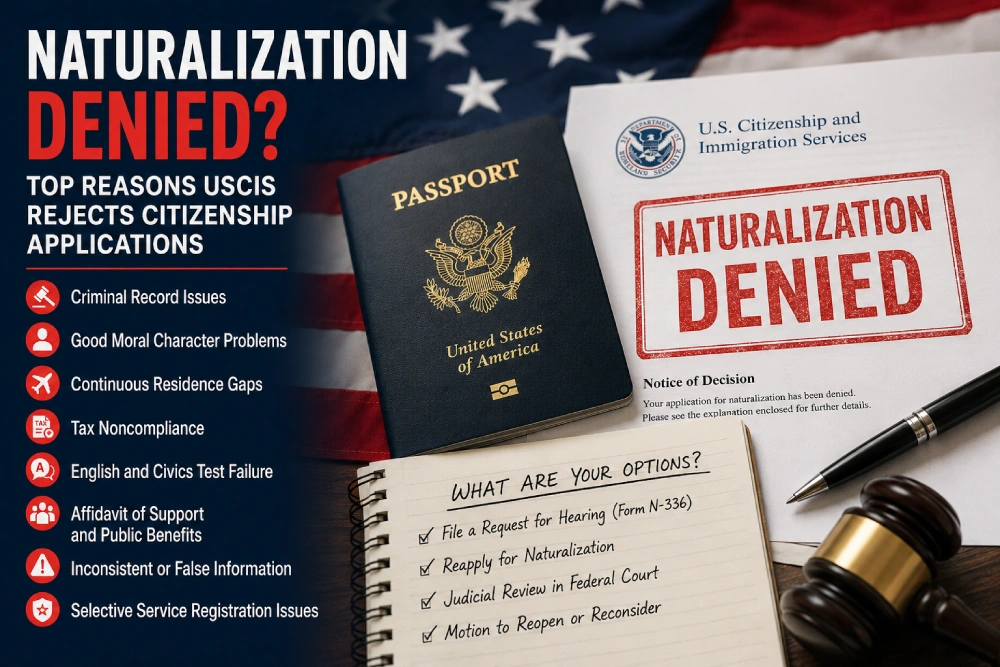
Top Reasons Your Naturalization Denied
- Criminal Record Issues
Your criminal history is one of the first things USCIS examines. Aggravated felonies like drug trafficking or serious violent crimes lead to a permanent bar on naturalization denied. Even dismissed or expunged offenses come under scrutiny. Minor infractions like traffic violations typically are not disqualifying – unless you fail to disclose them.
- Good Moral Character Problems
USCIS has gotten way stricter about denying citizenship based on good moral character. Back in August 2025, they switched from a simple checklist to a full holistic review. Now they look at positive stuff — community involvement, steady work, paying taxes. But they’re also digging into things like multiple DUIs, false claims to citizenship, unlawful voting, and even habitual traffic tickets.
- Continuous Residence Gaps
To qualify for naturalization, you typically need five years of continuous residence (or three years if married to a U.S. citizen). Extended trips abroad lasting six months or more can break your continuous residence and reset your clock. Trips of one year or longer almost always cause a break.
- Tax Noncompliance
Unpaid taxes, unfiled returns, or willful tax evasion can derail your citizenship efforts. Even if your tax issues happened years ago, USCIS may still consider them when evaluating your character.
- English and Civics Test Failure
You generally need to demonstrate basic English proficiency and knowledge of U.S. government and history. Failing either test is not an immediate disqualifier – you usually get a second opportunity within 60 to 90 days. If you miss your second citizenship denied after passing interview or test, USCIS will deny citizenship your application.
- Affidavit of Support and Public Benefits
This is a growing trend. If you received means-tested public benefits while your sponsor signed an Affidavit of Support (Form I-864), USCIS may scrutinize your application. The key issue is fraud. If you applied for benefits you were not eligible for, failed to disclose your sponsor, or misrepresented your household income, USCIS may allege willful misrepresentation.
- Inconsistent or False Information
Fraud or misrepresentation on your application is one of the most significant grounds for denial of citizenship. This includes lying about travel history, omitting prior arrests, or using false documents. Even white lies can become serious roadblocks. If USCIS determines your application contains fraudulent answers, you may face a permanent bar from citizenship.
- Selective Service Registration Issues
If you are a male applicant who lived in the U.S. at any time between age 18 and 26, you must register with the Selective Service within 30 days of turning 18. Not doing so raises a presumption against good moral character.
What Happens to Your Green Card If Citizenship Is Denied?
Here is the most important thing to know. An N-400 denial does not automatically take away your green card . In most cases, you remain a lawful permanent resident. You keep your right to live and work in the U.S.
Only in rare situations, when USCIS suspects your green card was obtained through fraud, can denial lead to removal proceedings. Even then, USCIS must start a separate legal process before taking action.
What Are Your Options After Naturalization Denied?
- File a Request for Hearing (Form N-336)
This is the most direct way to challenge a denial. You must file within 30 days of the denial. USCIS schedules a new hearing where a different officer reviews your case. You can present new evidence and correct errors.
- Reapply for Naturalization
Sometimes the best approach is simply to file a new N-400 application. This makes sense if you failed the English or civics test but have since prepared better, or if enough time has passed to meet residency requirements.
- Judicial Review in Federal Court
If USCIS denies your appeal, you can ask a federal district court judge to review the decision under 8 U.S.C. § 1421(c). The judge can examine whether USCIS acted properly under the law. This is complex and requires legal representation.
- Motion to Reopen or Reconsider
If you have new evidence that was not available earlier, you can ask USCIS to reopen the case. If you believe USCIS made a legal error, you can request reconsideration.
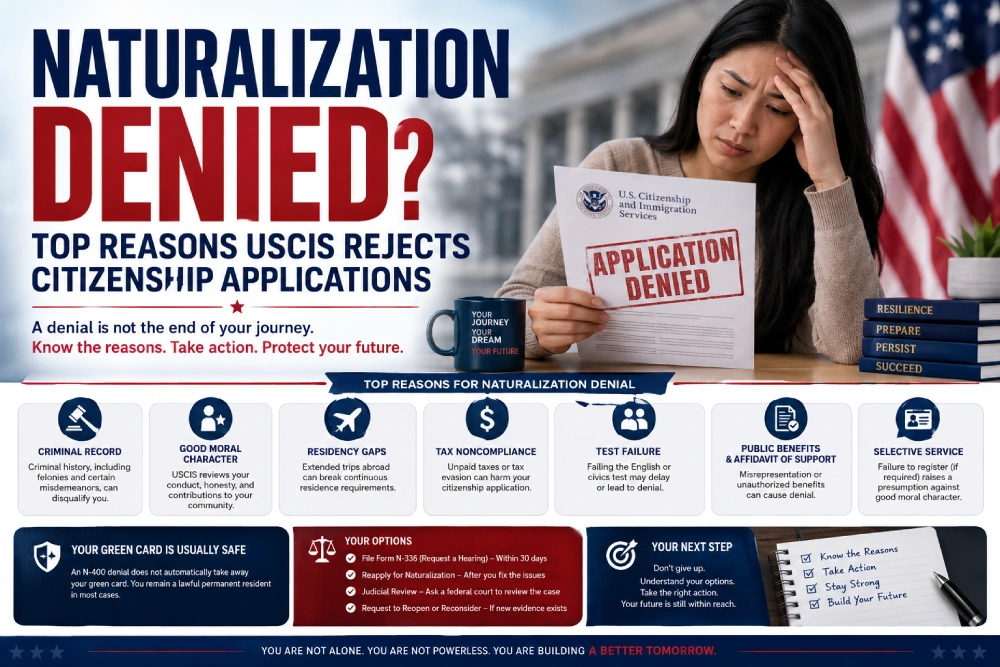
Conclusion:
A citizenship application rejected is a setback, not a dead end. You remain a lawful permanent resident in most cases . You have options – appeals, reapplications, federal review. The key is understanding why your naturalization denied, acting quickly and knowing the reasons for denial of a passport.
Frequently Asked Questions
What happens if citizenship application is denied?
If your citizenship application is denied, you usually keep your green card. You can appeal or reapply. In rare cases, USCIS may start removal proceedings if fraud is suspected.
What will prevent you from getting a passport?
A naturalization denial means you are not a citizen yet, so you cannot get a U.S. passport. Once you resolve the denial and successfully naturalize, you can apply.
What happens if your N-400 is denied?
You remain a lawful permanent resident. USCIS issues a written denial letter explaining the reason. You have 30 days to appeal or decide to reapply later.
Citizenship denied, what happens to green card?
In most cases, nothing happens to your green card. You keep it. Only serious fraud or misconduct can lead to green card revocation .
Why was my naturalization denied?
Common reasons for denial of passport include criminal records, lack of good moral character, residency gaps, tax issues, test failure, Selective Service issues, or fraud.
Can I apply again if my citizenship is denied?
Yes. You can reapply after addressing the issues that caused the denial . If you failed the test, study and reapply. If you had residency gaps, wait until you qualify.
How do I appeal a naturalization denial?
File Form N-336, Request for a Hearing on a Decision in Naturalization Proceedings, within 30 days of the denial.
What is good moral character for naturalization?
Good moral character means honesty, community involvement, stable employment, tax compliance, and no serious criminal or ethical violations. USCIS now uses a holistic review.
Will I be deported if my citizenship is denied?
Usually not. Most denials do not lead to deportation. You remain a green card holder. Only fraud or serious crimes can trigger removal proceedings.
How do I check my naturalization application status?
You can check your case status online at the USCIS website using your receipt number from Form N-400.