A VAWA self petitioner may be able to file for immigration benefits without requiring cooperation from the abusive spouse or qualifying relative. For individuals experiencing abuse within a qualifying family relationship, this can provide an immigration option that does not depend on the abuser’s participation.
VAWA allows certain abused spouses, children, and parents of U.S. citizens or lawful permanent residents to file a self-petition without relying on the abusive relative to file on their behalf.
Key eligibility requirements generally include the qualifying family relationship, battery or extreme cruelty, shared residence with the abusive relative, good moral character, and other applicable immigration requirements
Understanding these requirements can assist you in seeing whether your circumstances may qualify before taking the next steps.
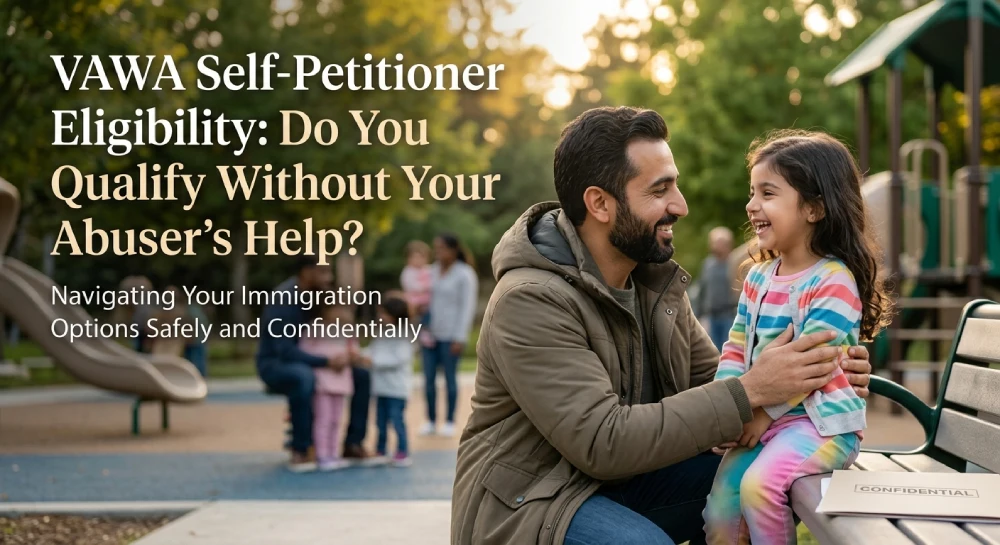
What Is a VAWA Self-Petition?
A VAWA self petitioner is an individual who applies for Form I-360 as a self-petitioner for reasons of immigration law, not through an abusive spouse, parent, or child. VAWA self-petition eligibility differs depending on whether the applicant is a spouse, child, or parent. The immigration status and qualifying relationship of the abusive relative also matter. Self-petitioners can be men and women.
Who Meets VAWA Eligibility Requirements?
In order for the person to be eligible to become a VAWA self-petitioner, generally an applicant will be required to demonstrate a qualifying relationship with an abusive United States citizen or lawful permanent resident. Qualifying victims of abuse include spouses, children, and parents who meet specific requirements.
For spouses, USCIS generally requires evidence of a good-faith marriage. In addition, proof of battery or extreme cruelty is typically needed. In addition, the VAWA self petitioner must also satisfy conditions regarding residence, good moral character, and the requirements relating to immigrant classification. Certain divorced spouses may be eligible.
What Counts as Battery or Extreme Cruelty?
Battery or extreme cruelty is not limited to a single physical act. Evidence of violence, threats, intimidation, coercive acts, or other acts that meet the legal standard may be considered.
Threats, intimidation, coercive conduct, and other abusive behavior may be relevant when establishing battery or extreme cruelty, depending on the circumstances.
A police report can help, but USCIS allows for credible, relevant evidence submission, so applicants should consider all records.
What Evidence Does a VAWA Self Petitioner Need?
A VAWA self petitioner must be able to provide evidence on a number of issues. This can include relationship, proof of the abuser’s status, residence, declaration, medical records, police or court records, and witness statements. USCIS may consider any credible, relevant evidence submitted to support the self-petition.
A lease, utility records, financial records, or other documents may help establish that the applicant and abusive relative shared a residence.
Additionally, the applicant should ensure to maintain copies and potentially utilize a safe mailing address for delivery if home delivery represents a safety concern. USCIS specifically provides for an alternate, or safe mailing address in VAWA filings.
How to Apply for VAWA
- Check eligibility: A VAWA self petitioner should verify the relationship and requirements.
- Gather evidence: Collect evidence to support the relationship, residence, and abuse.
- Prepare Form I-360: Complete the Form I-360 petition and supporting documents.
- File with USCIS: Prepare and file these materials accordingly.
- Monitor the case: Maintain copies and receive notices accordingly.
USCIS has special confidentiality procedures for VAWA cases. Procedures and fees can change, so ensure that you review the current USCIS instructions prior to filing.
VAWA or a U Visa?
VAWA is one of the sources of relief for qualifying immigrant victims of domestic violence. A U Visa has different requirements that relate to qualifying criminal activity and law-enforcement cooperation. The two options are different, and the relevant one depends on the petitioner’s circumstances.
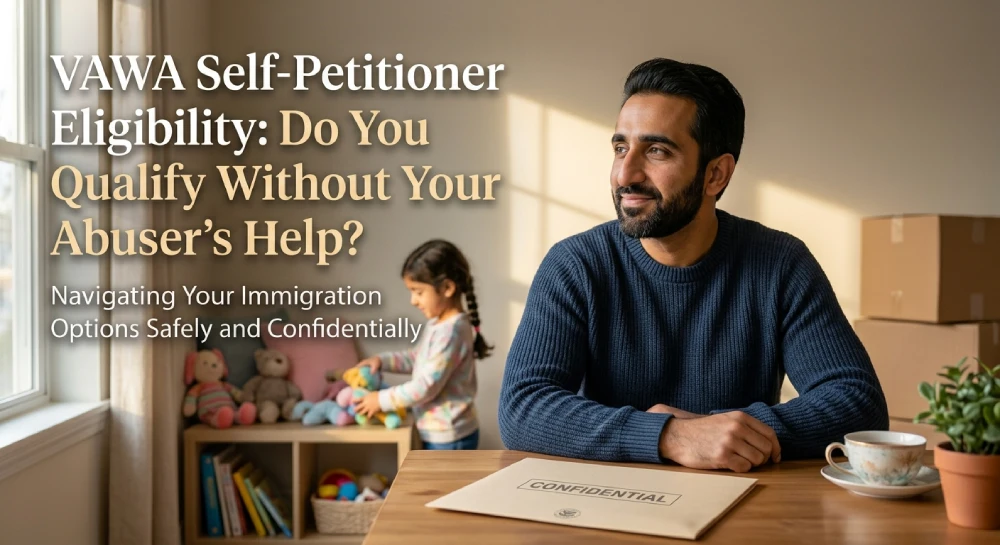
What If Your Abusive Spouse Refuses to Help?
A qualifying VAWA self-petitioner generally does not need the abusive relative to file, participate in, or consent to the self-petition.
This is especially important when a person fears retaliation or losing immigration documents. A VAWA self petitioner must still be able to meet the requirements and submit supporting evidence.
Conclusion
A VAWA self petitioner may have an immigration option even when an abusive family member refuses to cooperate. Critical issues include the relationship, status of the abuser, battery or extreme cruelty, residence, good moral character, and evidence. Review current USCIS requirements before filing. For divorce, limited evidence, or other complications, qualified legal assistance can help you understand which requirements might apply.
Frequently Asked Questions
Can I file VAWA without my abuser’s help?
Yes. A VAWA self-petition can generally be filed without the abusive relative’s participation. You must still fulfill the applicable requirements.
Does VAWA apply to men?
Yes. Eligibility for men is available upon satisfying the requirements related to abuse.
What is Form I-360 for VAWA?
Eligible VAWA self-petitioners use Form I-360 to request classification as a VAWA self-petitioner and do not need the abusive relative to file the petition for them.
Do I need a police report to file VAWA?
No. USCIS accepts credible, relevant evidence that can apply to other supporting evidence submissions.
Can I file VAWA after getting divorced?
Potentially. Certain former spouses may qualify for VAWA after divorce if they meet specific requirements, including applicable timing and abuse-related conditions.
Can an undocumented immigrant file a VAWA self-petition?
Yes, potentially. Being undocumented does not automatically prevent someone from filing a VAWA self-petition, but all other eligibility requirements must be satisfied.
What can qualify as extreme cruelty?
It can include threats, intimidation, controlling conduct, and other behavior that satisfies the legal standards.
How long does a VAWA case take?
VAWA processing times can vary. Applicants should check USCIS’s current processing-time information because processing estimates can change
Is VAWA the same as a U Visa?
No. VAWA self-petitioning and U nonimmigrant status are different immigration options with different eligibility requirements.
Can VAWA lead to a green card?
Potentially. An approved VAWA self-petition may provide a basis for pursuing additional immigration benefits, but eligibility for those benefits depends on the applicant’s individual circumstances and applicable requirements.